

Day 12. Put on my socks this morning standing up and THEN realized what I'd just done. Stood there in my bedroom and cried a little. If you know, you know.
Chloe · UK ★★★★★


The diagnosis was right. The conclusion — "just wait for surgery, while it gets worse" — is where everyone gets it wrong. My wife's perfect post-surgery X-ray proved it.
I'm about to piss off a lot of orthopaedic surgeons in Britain.
My own colleagues. The consultants I've worked alongside. The surgeons I still see every week.
Because what I'm about to share could change the way thousands of people think about the years before a hip replacement.
But I don't care.
Not anymore.
After watching my wife cry herself to sleep for the better part of 5 years…
After watching physio, injections and "wait and see" buy her a little time — but never give her life back…
After spending 22 years in orthopaedic surgery — and still being unable to fix the one hip that slept next to me…
I discovered something that changed everything.
And if you're reading this with a pillow wedged between your knees…
If you have to roll yourself out of bed because your hip won't cooperate…
If getting out of the car has become a manoeuvre…
Or if you're quietly doing the maths on how many more years you can put off surgery…
The next 5 minutes could change the way you look at your hip completely.
My name is Dr. James Anderson.
I'm an orthopaedic surgeon.
Twenty-two years.
And yes — I still believe surgery has its place.
I'm not here to tell you hip replacements don't work.
They do.
But for years, I was also one of the doctors who looked at an X-ray like yours, saw the narrowing, the arthritis, the wear…
And eventually delivered the sentence you're probably living under right now:
"Come back when it's bad enough."
That's the part I can't ignore anymore.
Because nobody talks about the years in between.
The years where you're "not bad enough" for surgery…
But too sore to walk properly.
Too stiff to sleep comfortably.
Too cautious to travel.
Too worried about setting your hip off again to do the things you used to do without thinking.
Those years aren't nothing.
And they're not just a waiting room for surgery.
They're the years where the muscles around your hip get tighter.
Where you move less because moving hurts.
Where the deep tissue around the joint gets less of the circulation it depends on.
And where every month of doing less makes doing more feel harder.
I'm about to show you why those forgotten years — the years nobody treats properly, nobody talks about, and everybody tells you to simply "manage" —
may be where your hip is actually won or lost.
And why my wife's perfectly planned treatment still wasn't addressing the part I had spent years overlooking.
But first, let me tell you about the night that changed everything.

It was 2:47 AM on a Tuesday.
Fourteen months after Diane's surgery.
I woke up to an empty bed.
I found her downstairs, in the recliner she'd practically moved into, a pillow wedged between her knees and both hands gripping the side of her thigh.
She wasn't crying.
She was sobbing.
The kind of raw, shaking sound that makes your stomach drop.
"I can't do this anymore," she whispered.
"We did everything right, Jim. We did everything. And I still can't sleep in my own bed."
Fourteen months earlier, she'd been given a brand-new hip.
The operation had gone exactly as planned.
The implant looked right.
The post-op X-rays looked right.
On paper, it was the kind of result every surgeon wants to see.
And yet there she was.
Sobbing in a recliner at 2:47 in the morning.
The deep ache around her hip was still there.
The burning discomfort down the front of her thigh was still there.
She still couldn't lie comfortably on her left side.
She still thought twice before taking the stairs.
She'd stopped getting down on the floor to play with our grandson because she wasn't sure she'd be able to get back up again.
And I just stood there.
Useless.
An orthopaedic surgeon with 22 years behind him…
staring at the one person I wanted most desperately to help.
The worst part?
We hadn't ignored the usual advice.
We'd done all of it.
The same things I'd watched patients cycle through for years.
Physio?
Weeks of appointments.
Her muscles got a little stronger.
But the deep ache barely changed.
Cortisone injections?
The first helped for a while.
The next one helped for less time.
Eventually, even that temporary relief started disappearing.
Painkillers?
They took the edge off when things were bad.
But once they wore off, the same hip was waiting underneath.
"Try losing some weight."
She did.
It changed the number on the scales.
It didn't give her comfortable nights back.
And finally…
the surgery itself.
A new joint.
A clean X-ray.
A successful recovery on paper.
And still she couldn't sleep through the night.
That was the detail I couldn't get past.
Because if the implant was doing exactly what it was supposed to do…
why was she still hurting?
I went back through everything.
Her scans.
Her notes.
Her rehab.
Her gait.
Her range of motion.
Again and again.
And then something uncomfortable started becoming obvious.
We'd spent years focusing almost entirely on the joint.
The cartilage.
The bone.
The implant.
The visible damage on the scan.
But the hip isn't just a ball and socket.
It's surrounded by layers of muscle and soft tissue responsible for stabilising it, moving it and carrying you through every step.
And those tissues hadn't been replaced.
They were still hers.
Still tight.
Still guarded.
Still struggling after years of pain and reduced movement.
That night, standing in our kitchen at 3 AM, something inside me shifted.
Not because I suddenly thought everything I'd learned in orthopaedics was wrong.
It wasn't.
Surgery has its place.
But I realised we'd been paying almost all our attention to one part of the problem…
while barely talking about what was happening in the tissue surrounding the joint.
And I needed to know why.
Because if Diane could have a technically successful hip replacement…
and still be sitting downstairs unable to sleep…
there had to be another piece of the puzzle.
So I started looking for it.

For the next 3 months, I lived like a man possessed.
I started reading like a junior doctor again.
Every night after clinic.
Rehabilitation journals I'd barely opened in years.
Pain-science papers I would once have skimmed past.
Research on the muscles, tendons and soft tissue surrounding the hip.
I called people whose work I hadn't paid enough attention to.
I filled notebooks.
And the more I read, the more uncomfortable I became.
Because I started to realise something.
The way we talk about hip pain in Britain is built around only part of the picture.
Here's what almost nobody explains properly:
The cartilage everyone points to on your X-ray doesn't have its own nerve supply.
Yet the tissues surrounding your hip absolutely do.
The muscles.
The tendons.
The joint capsule.
The structures that tighten, guard and compensate every time moving starts to hurt.
And that means something important.
An X-ray can show you what the joint looks like.
It cannot, by itself, tell you exactly where every bit of your pain is coming from.
That was the piece I'd been missing.
For years, I'd looked at the narrowing.
The arthritis.
The "bone-on-bone" description.
And treated the scan as though it explained the whole experience.
But Diane had already shown me why that couldn't be the whole story.
Her new joint looked excellent.
And she still hurt.
So I stopped asking:
"How worn is the joint?"
And started asking a different question:
"What condition are the tissues around the joint in?"
That's when everything began to make more sense.
Years of pain change the way you move.
You shorten your stride.
You stop rotating through the hip.
You avoid stairs.
You stop sleeping on that side.
You brace before standing.
You move less because movement hurts…
and the muscles around the joint gradually become tighter, weaker and more guarded.
The joint may be part of the story.
But it isn't always the entire story.
And suddenly Diane's experience didn't look mysterious anymore.
Her hip wasn't simply "worn out".
The tissues around it had spent years being protected, underused and held tight.
And even after the joint itself had been replaced…
those tissues were still there.
Still tight.
Still guarded.
Still asking for help.
That was the moment the entire problem shifted in my head.
Maybe the question wasn't just:
"How do we replace what's worn?"
Maybe there was another question we should have been asking much earlier:
"How do we help the tissue around the hip start working properly again?"
And once I started looking at the problem that way…
I found three things that kept appearing again and again.
Let me explain…
Picture your hip as a heavy iron gate — and the muscles around it as the crew that swings it open and shut, thousands of times a day.
When you're younger, that crew does its job without you ever thinking about it.
Every step.
Every staircase.
Every time you stand up from a chair.
The muscles around your hip absorb force, stabilise the joint and help control the movement before the load reaches deeper structures.
Your hip just… works.
Then one day, it starts to hurt.
And your nervous system does something that sounds helpful at first.
It starts protecting the area.
You shorten your stride.
You shift your weight.
You stop rotating through the painful side.
You push harder through the other leg.
You take the lift instead of the stairs.
You sit down instead of walking.
Most of the time, you don't even realise you're doing it.
But there's a problem.
Muscles don't stay exactly the same when you stop asking them to work normally.
They weaken.
They tighten.
Their coordination changes.
Some become overworked.
Others stop contributing the way they used to.
And because moving hurts, you move even less.
Now the hip has lost part of the muscular support it depended on.
So ordinary movements feel harder.
Standing feels heavier.
The first few steps after sitting feel stiffer.
Getting out of the car becomes a manoeuvre.
Turning over in bed becomes something you plan.
And because those movements hurt more…
you protect the hip even more.
Pain → guarding → less movement → weaker, tighter tissue → more pain.
That's the cycle.
And it can quietly build for years.
Especially during the years you're told:
"It's not bad enough for surgery yet."
Those years matter.
Because your hip isn't just an X-ray.
It isn't just cartilage and bone.
It is an entire system of muscles and soft tissue that has to work together every time you move.
Here's the sentence I want you to read twice:
Your hip may not simply be "worn out". It may be stuck in a cycle of guarding, stiffness and reduced movement.
Think about a rusty hinge.
A broken hinge needs replacing.
But a rusty hinge?
It becomes stiff.
It squeaks.
It resists movement.
And the less you move it, the worse it feels.
That's what finally changed the way I looked at Diane's hip.
Not because I suddenly thought arthritis wasn't real.
Of course it is.
Not because I believed surgery was unnecessary.
Sometimes surgery is absolutely the right answer.
But because I realised that between diagnosis and surgery, there is often an enormous period where the tissues around the joint are still alive, still adaptable and still influencing how that hip feels every single day.
And those tissues don't automatically return to normal just because an operation changes the joint.
That was the part I'd underestimated for years.
The system is very good at identifying structural damage.
It can show you narrowing.
Arthritis.
Bone changes.
It can prescribe medication.
Offer injections.
Refer you for physiotherapy.
And, when necessary, replace the joint.
But there is a huge middle period that many people recognise immediately:
Too sore to live normally.
Not "bad enough" for surgery.
So you manage.
You adapt.
You avoid.
You wait.
And month after month, the hip gets less movement — not more.
That's why I stopped thinking only about what was worn…
and started thinking about what was no longer working properly around it.
The muscles.
The circulation that comes with movement.
The stiffness.
The guarding.
The tissue that had spent years being protected instead of used.
And that led me to a completely different question:
What if, instead of simply waiting for the hip to get worse, we helped the surrounding tissue start doing its job again?
That question led me to three things.
Not another pill.
Not another static brace.
Not another "wait and see."
Three physical inputs that could be used together, at home, in one 15-minute session.
And that's where everything changed.

Remember my wife sobbing in that recliner at 2:47 AM?
Three weeks after I changed the way I was looking at her hip, she was down on the living-room floor playing with our grandson.
Then she stood back up.
Without pushing off the sofa. Without asking me for a hand.
I just stared at her.
No second operation.
No new injection.
No complicated rehab programme.
Just 15 minutes a day.
And what frustrated me most was how simple the idea was.
After more than two decades in orthopaedics, it took someone from the rehabilitation side of medicine to make me see what I'd been missing.
Surgeons are trained to look at the joint.
The X-ray.
The cartilage.
The bone.
The implant.
Rehab specialists spend their days looking at something different:
What the muscles around that joint are actually doing.
When I explained what I'd been seeing in Diane, the answer I got was immediate.
"You're still looking at the hinge," he told me.
"Start looking at the crew around it."
And that's when the pieces finally came together.
If years of pain had left the muscles around her hip tight, guarded and underused…
then simply telling those muscles to "get stronger" wasn't necessarily the first step.
First, we needed to create an environment where they could relax, warm up and start working again.
And that meant three physical inputs working together.
Not one.
Three.
Rhythmic compression.
Instead of asking Diane to dig into the area herself with a massage ball or hold a massage gun against her hip, controlled compression repeatedly presses and releases the tissue around the hip.
The goal was simple:
Help tight, guarded tissue start letting go.
Therapeutic heat.
Heat was the second piece.
Because when an area has been stiff and protected for years, warming the surrounding tissue can make movement feel easier and more comfortable.
It helps create the conditions for the muscles around the hip to stop behaving like they're permanently bracing for impact.
Think of it as warming up the crew before asking them to work.
Red light therapy.
This was the piece I'd paid the least attention to.
Specific wavelengths of red and near-infrared light are used in photobiomodulation research because of their interaction with cellular processes involved in energy production and recovery.
The NOVAA FIT system uses 660nm + 850nm red and near-infrared light alongside heat and compression.
Not instead of movement.
Not as magic.
But as the third part of the same 15-minute routine.
And suddenly the whole idea made sense.
RELEASE the guarded tissue.
REFEED it with therapeutic warmth.
RECHARGE the recovery environment around it.
All in the same session.
Because one therapy on its own only tackles one piece.
Massage alone?
It may loosen the area temporarily.
Heat alone?
Comforting — but incomplete.
Red light alone?
No compression. No mechanical input.
And exercises?
Important — but much harder to perform consistently when every movement begins with a stiff, guarded hip.
That was the mistake we'd been making with Diane.
We kept asking her hip to perform better…
before helping the surrounding tissue become more comfortable doing the work.
So instead of adding another pill…
another injection…
another complicated set of exercises she'd dread doing…
we combined the three inputs into one routine.
Compression. Heat. Red light.
One device.
One button.
15 minutes a day.
I started calling it:
The Triple-Action Reset.
And once Diane started using those three therapies together…
things began changing in ways neither of us expected.
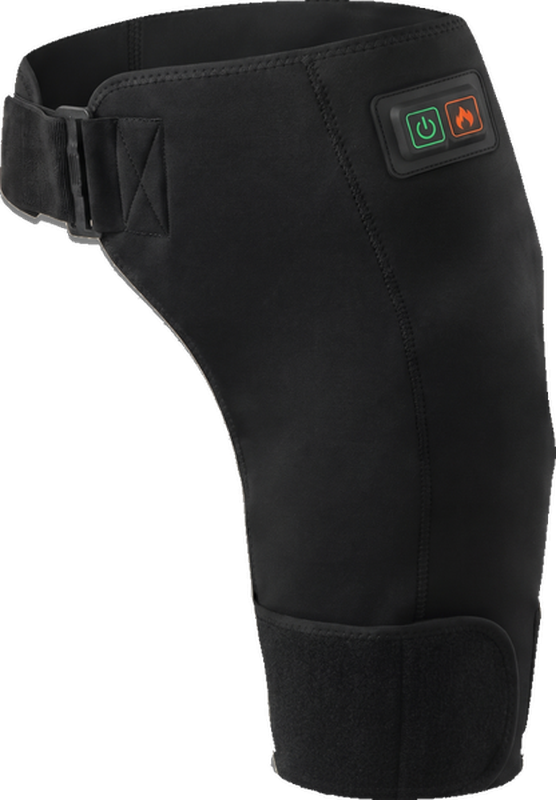
It's called the NOVAA FIT. Hip Triple Therapy Recovery System.
And it was built around the exact three things I'd been looking for — delivered together in one simple 15-minute session:
TARGETED RHYTHMIC COMPRESSION — repeated pressure and release around the hip to help tight, guarded muscles begin to loosen. (RELEASE)
THERAPEUTIC HEAT — controlled warmth around the hip to help stiff tissue feel more comfortable and encourage the circulation that naturally comes with warmth and movement. (REFEED)
660 + 850nm RED & NEAR-INFRARED LIGHT — the wavelengths used in photobiomodulation research, delivered directly around the hip as part of the same recovery session. (RECHARGE)
All three.
Together. Automatically.
You simply wrap the NOVAA FIT around your hip…
secure the straps…
press one button…
and let the system run through its session.
Fifteen minutes.
In your own chair.
On the sofa.
Watching the news.
Reading.
Having your morning coffee.
No appointments to schedule.
No driving across town several times a week.
No complicated app.
No Bluetooth.
And no trying to hold a massage gun against an awkward spot for twenty minutes.
Just three complementary therapies working around the hip at the same time:
COMPRESSION.
HEAT.
RED LIGHT.
The exact combination I wished we'd had when Diane first started spending her nights downstairs.
Because instead of simply asking her painful hip to work harder…
we could finally start by giving the tissue around it a reason to relax, warm up and move again.
15 minutes a day. One button. Three therapies.
And for Diane, that was where things finally started to change.

When you strap on the NOVAA FIT. Hip Triple Therapy Recovery System, here's a simple way to think about what those 15 minutes are doing:
Rhythmic compression begins repeatedly pressing and releasing the tissue around your hip — including the glutes and deeper muscles that can become tight and guarded after months or years of painful movement.
For many people, this is the first thing they notice:
the area starts to feel less clenched.
Not because years of hip trouble disappear in sixty seconds.
But because instead of asking those muscles to work harder…
you're finally giving them permission to relax first.
At the same time, therapeutic heat begins warming the tissue around the hip.
That warmth can make stiff muscles feel more comfortable and supports the local circulation that naturally increases when tissue warms.
Think of it like warming up a stiff engine before asking it to move.
For years, Diane had been doing the opposite.
Wake up stiff.
Push through it.
Walk until it hurt.
Sit down.
Repeat.
Now, for 15 minutes, we were starting with warmth and compression before demanding movement.
Then there's the part I'd overlooked for years:
660nm red light + 850nm near-infrared light.
These wavelengths are widely used in photobiomodulation research because of the way light interacts with cellular processes involved in recovery and energy production.
And NOVAA FIT delivers them around the hip while the compression and heat are still working.
That's why I began thinking of this final piece as:
RECHARGE.
Not because it magically "switches a dead muscle back on."
But because it adds a third recovery input to the same tissue you're already warming and mechanically stimulating.
Compression.
Heat.
Red + near-infrared light.
All working together.
And after 15 minutes?
You unstrap it.
Stand up.
Take a few steps.
And instead of immediately testing your hip for pain…
you may notice something far simpler:
movement feels easier.
Less guarded.
Less stiff.
Less like every first step requires a negotiation.
Not numb like a painkiller.
Not temporarily battered loose by an aggressive massage.
Just a hip that feels warmer, looser and more ready to move.
That was the difference Diane noticed.
And it was the first time in years we weren't trying to force her hip to do more.
We were preparing it to move first.

This wasn't something somebody figured out last Tuesday.
The principles behind it have been studied for years.
Rehabilitation specialists have long understood that when a painful hip changes the way you move, the muscles around that joint can become weaker, tighter and less efficient.
And the research kept pointing me toward the same idea:
The joint is only part of the problem.
The muscles surrounding it matter too.
So does movement.
So does circulation.
So does the ability of those tissues to recover after years of guarding and underuse.
Then there was red and near-infrared light therapy.
Researchers have been studying photobiomodulation for decades because of the way specific wavelengths interact with cellular processes involved in energy production and recovery.
NOVAA FIT uses 660nm red light and 850nm near-infrared light alongside rhythmic compression and therapeutic heat.
That's what finally made the system click for me.
It wasn't another single-purpose gadget.
It put all three inputs into the same 15-minute routine.
RELEASE.
REFEED.
RECHARGE.
And once people started using that combination consistently, I began hearing versions of the same sentence again and again:
"I wish I'd found this before I spent so long just waiting."
Here's the kind of feedback we started seeing:
Margaret H. — York, 58
"For years every appointment seemed to end the same way: manage it, keep moving and come back if it gets worse. Then one evening I realised I'd been lying on my bad side for nearly half an hour without thinking about it. That sounds tiny unless you've spent years arranging your entire night around one hip."
Donna R. — Manchester, 54
"Honest review: during the first week, I wasn't convinced. It felt warm and comfortable, but I'd tried heating pads before. Then one morning I walked halfway down our road before I realised I wasn't doing that little protective limp I'd been doing for years. That's when I started paying attention."
Susan T. — Bristol, 61
"I was told my hip was badly worn and that eventually I'd probably need a replacement. Last weekend I got down on the floor with my granddaughter. When I stood back up without grabbing the sofa, my daughter just looked at me. I hadn't realised how many little things I'd stopped doing."
None of those moments sound dramatic on an X-ray.
But when your hip has controlled where you sleep…
how far you walk…
whether you take the stairs…
whether you get down on the floor with your grandchildren…
those little moments are everything.
And that was what interested me most.
Not whether someone could say their hip felt "nice and warm" for 15 minutes.
But whether making those 15 minutes part of their day helped them start doing things they'd quietly stopped doing.
Walking further.
Sleeping more comfortably.
Standing up without planning it first.
Trusting the hip again.
Because ultimately, that's the result that matters.
Not a number on a scan.
Getting pieces of your life back.

Let me show you what "just wait for surgery" can REALLY cost in Britain:
The Physio Route: Two sessions a week for 12 weeks = 24 appointments.
Private physio commonly runs around £50–£80 a session depending on where you live.
That's roughly £1,200–£1,900 before you've counted petrol, parking, time off work or the exercises you're expected to keep doing at home.
And if your hip is still stiff and guarded?
You're usually told the same thing:
"Keep at it."
The Injection Route: Another appointment. Another referral. Another waiting list.
Maybe the injection settles things down for a while.
Then the effect fades.
And you're right back where you started — wondering how long you can keep repeating the cycle.
The Surgery Route: If you decide you can't wait and go private, a hip replacement in Britain can run well into five figures.
Current private prices at major UK hospitals are often around £14,000–£17,000+.
Then comes the recovery.
Weeks of restricted movement.
Time off work.
Rehabilitation.
And even after the joint has been replaced, the muscles surrounding it still need to recover.
A new joint doesn't automatically give you a new muscular system.
That was the lesson Diane taught me the hard way.
The problem isn't that physio, injections or surgery are useless.
They're not.
The problem is the enormous gap between them.
The years where you're told:
"Keep moving."
"Manage the pain."
"Come back if it gets worse."
"You're not ready for surgery yet."
So you wait.
And while you wait…
you walk less.
You sleep differently.
You avoid stairs.
You stop getting down on the floor.
You quietly build your entire life around one bad hip.
That's the gap NOVAA FIT Hip was built for.
Not to replace surgery.
Not to tell you to stop seeing your GP.
But to give you something you can actually do during those months — or years — when the only other instruction you've been given is:
"Wait."
And here's what surprised me most.
The technology itself isn't complicated.
Rhythmic compression.
Therapeutic heat.
660nm + 850nm red and near-infrared light.
Three therapies that already exist separately…
finally brought together in one cordless wrap you can use at home for 15 minutes a day.
No appointments.
No driving across town.
No clinic three times a week.
No app.
No Bluetooth.
No complicated routine.
Wrap it on. Press one button. Sit back for 15 minutes.
The complete NOVAA FIT Hip system — including the device, two-year replacement warranty, USB-C cable, extension strap and recovery guides — carries a combined stated value of over £400.
The normal device price is £159.90.
But that's not what you'll pay today.
Right now, during NOVAA FIT's Early Black Friday offer, the Hip Triple Therapy Recovery System is £69.90.
That's 56% OFF.
With FREE tracked UK delivery.
And you're protected by a 60-day money-back guarantee.
So instead of spending another twelve weeks wondering whether the next appointment will finally be the one that changes something…
you can try the entire Triple Therapy system in your own home.
Every day.
For a full 60 days.
And if your hip isn't moving, sleeping or feeling better?
Send it back.
Get your money back.
Because after watching Diane spend years arranging her life around one painful hip…
I don't believe anyone should have to gamble thousands of pounds just to find out whether something can help them.
£69.90.
15 minutes a day.
60 days to decide.
And for the first time in years…
you don't have to simply wait.

When a major medical distributor saw the NOVAA FIT. Hip Triple Therapy Recovery System, their offer came fast:
Put it in clinics at £399.
Take your cut.
Let the clinics decide who gets access to it.
We said no.
Because the entire point of this system is that it shouldn't cost what the system charges you for not fixing your hip.
So we're doing something that made our accountant very nervous.
For a limited time, we're releasing the NOVAA FIT Hip at 56% OFF.
Not £159.90.
Just £69.90.
Less than a handful of private physio appointments.
Less than the pile of heating pads, massage gadgets, cushions, braces and "miracle" creams already gathering dust in your cupboard.
For a device built specifically around the three things we'd been looking for:
RHYTHMIC COMPRESSION.
THERAPEUTIC HEAT.
660nm + 850nm RED & NEAR-INFRARED LIGHT.
All three.
At the same time.
In one 15-minute daily session.
Why would we do this?
Because I spent 22 years inside a system where people can spend months — sometimes years — being told to manage the pain and wait until it's bad enough.
This is my way of doing something about that wait.
And because every person who gets back to walking further…
sleeping more comfortably…
getting out of a chair without thinking about it…
or getting down on the floor with their grandchildren again…
becomes living proof that those years don't have to be spent doing nothing.
I want thousands of those stories out there.
Before another layer of distributors, clinics and middlemen turns a £69.90 home system into something ordinary people can no longer afford.
That's why NOVAA FIT Hip is going directly to you.
No clinic markup.
No appointment required.
No subscription.
No app.
No ongoing fees.
£69.90.
With FREE tracked UK delivery.
And because I don't expect you to take my word for any of this…
you get 60 full days to try it at home.
Use it every day.
Put it through real life.
Stairs.
Walks.
Getting out of the car.
Standing up from the sofa.
Sleeping on your bad side.
And if after 60 days your hip isn't moving, sleeping or feeling better?
Send it back and get every penny refunded.
No store credit.
No complicated forms.
No questions asked.
Because the whole point was never to make hip recovery more expensive.
It was to finally make the wait useful.

Look, I get it.
You've been burned before.
You've spent good money on braces, cushions, creams, heating pads and "miracle" gadgets that turned out to be expensive cupboard-fillers.
So here's my promise:
Try the NOVAA FIT. Hip Triple Therapy Recovery System for 60 days.
Use it every single day.
Fifteen minutes, in your own chair.
Feel that guarded hip begin to loosen…
Feel the therapeutic warmth spread through tissue that's been stiff for years…
And one morning, maybe you realise you slept on your bad side without constantly waking up to reposition yourself.
You bend down and put your socks on without planning the movement first.
You get out of the car without bracing yourself against the door.
You walk into the kitchen and suddenly realise…
"Hang on. I wasn't limping."
And if that moment doesn't come…
If after giving NOVAA FIT Hip a proper 60-day trial your hip isn't moving, sleeping or feeling better…
We'll refund every penny.
No store-credit games.
No being trapped with something that did nothing for you.
Simply email support@novaafit.com, let us know, and we'll give you the return instructions.
That's it.
Why am I willing to put 60 days behind it?
Because this isn't something you're supposed to try twice and judge after a weekend.
The whole point is consistency.
15 minutes a day.
Rhythmic compression.
Therapeutic heat.
660nm + 850nm red and near-infrared light.
Day after day.
Long enough for you to judge it based on the only things that actually matter:
Are you walking more comfortably?
Are you sleeping better?
Are stairs easier?
Are you thinking about your hip less?
If the answer is no?
Send it back.
But if one morning you catch yourself doing something you haven't done comfortably in years…
without planning it…
without bracing first…
without thinking about your hip at all…
you'll understand why 60 days can change everything.
UPDATE: As of 24 November 2026
Demand for the NOVAA FIT. Hip Triple Therapy Recovery System has increased dramatically, and current Black Friday inventory is moving fast.
Order yours with UP TO 81% OFF + FREE GIFTS + FREE TRACKED UK SHIPPING while stock is still available.
Lock in your order while you can to secure the current Black Friday offer + FREE tracked UK shipping.
NOTE: This Black Friday offer is available directly through NOVAA FIT.
60-day money-back guarantee · Free tracked UK shipping


We're so confident NOVAA FIT Hip will help you, we give you 60 full days to try it. A fair shot. The full window for real change.
Use it daily. If your knee isn't moving better, bending better and carrying you better - every cent comes back. No forms. No store credit. No friction.
Ready to give your knee a fair shot?
 1809+
Reviews
